Last updated: 3 October 2026.
I think most of Express Entry can be done by one organised person with a laptop, a folder of documents and a few months of patience, and Canada’s immigration department agrees. Asked whether you need a representative to apply, its help centre answers in one word: ‘No.’ This guide takes Express Entry step by step, from the language test to the day you land, with the deadlines that run at each stage, the costs in rupees and the few places where careful people still lose an invitation. It also says where a licensed adviser earns the fee, and where an unlicensed one can cost you five years.
In this guide
- Three cut-offs in four days
- Express Entry step by step, with the clocks running
- Before the pool: a test, a report and a bank balance
- Which queue are you in?
- Sixty days after the invitation
- What it costs, in dollars and rupees
- The job offer that costs five years
- Do you need a consultant?
- If the invitation does not come
Three cut-offs in four days
On 28 September 2026, Immigration, Refugees and Citizenship Canada (IRCC) invited 733 provincial nominees to apply for permanent residence, and the lowest score it invited was 725. On 29 September it invited 2,000 candidates from the Canadian Experience Class at 518. On 1 October it invited 3,500 people in the trades category at 476, its largest trades round this year (the one in April invited 3,000 at 477). Those figures come from IRCC’s own record of rounds, and our Express Entry draw tracker follows them round by round.
The 725 is less dramatic than it looks, because a provincial nomination adds 600 points on its own. The gap between 518 and 476 is the one that matters.
IRCC also publishes who is waiting. On 27 September 2026 there were 229,904 profiles in the pool, and 16,465 of them scored between 471 and 480. An electrician or plumber in that band who scored 476 or more, with a year of full-time work in a listed trade within the last three years, was invited on 1 October. A candidate with the same score who fits no category, has no Canadian work experience, no French and no nomination was not. On IRCC’s record, that second person has not had a round open to them since at least mid-February: every round from 16 February to 1 October 2026 was for Canadian experience, provincial nominees, French speakers or a named group of occupations. Canada is open about why. It says category rounds are meant to meet economic goals it has identified in advance, and it publishes the occupation lists. You may disagree with its choices, but it has not hidden them.
So the first thing to work out is which queue you are standing in. Your score comes second.
Express Entry step by step, with the clocks running
Express Entry is a series of clocks as much as a points system. Each step below carries the deadline or validity period IRCC sets for it, and the cost where one applies. The rupee figures use about ₹67.6 to the Canadian dollar, the mid-market rate on 2 October 2026.
- Check that you qualify for a programme. No cost. For the Federal Skilled Worker Program: at least one year of continuous paid work in a TEER 0, 1, 2 or 3 job within the last ten years, CLB 7 in all four language abilities, and 67 points out of 100 on its selection grid. For the Canadian Experience Class: a year of skilled work in Canada within the last three years. For the Federal Skilled Trades Program: two years in a trade within the last five, plus a job offer or a Canadian certificate of qualification.
- Take an approved language test. IELTS General Training costs ₹19,000 in India (IDP India). Results count for two years.
- Get an Educational Credential Assessment (ECA) for any degree earned outside Canada. Fees are set by the assessing body. The report is valid for five years.
- Assemble proof of funds, unless you are exempt: CAD 15,263 (about ₹10.3 lakh) for one person, held and not spent.
- Create your profile. Once you start, you have 60 days to finish it. Once submitted, it stays in the pool for 12 months.
- Receive an invitation to apply. You then have 60 days to submit the full application, including a medical exam and police certificates.
- Pay the fees when you submit, then give biometrics within 30 days of IRCC’s biometrics letter. Government fees are CAD 1,590 (about ₹1.07 lakh) per adult.
- Wait for a decision, then land. IRCC’s service standard is to decide 80% of complete applications within six months. You must enter Canada before your Confirmation of Permanent Residence expires.
Steps two to four take the longest, so start them first. Steps six and seven are where the IRCC application rules stop being flexible.
Before the pool: a test, a report and a bank balance
Use the right version of the test. Express Entry accepts IELTS General Training, CELPIP-General and PTE Core in English, and TEF Canada and TCF Canada in French. IELTS Academic, the version many Indian students sit for university, is not on the list. CLB 7, the minimum for a federal skilled worker, means 6.0 in each IELTS band; CLB 9 means 8.0 in listening and 7.0 in the other three (IRCC equivalency charts). For most applicants I know of no cheaper way to gain points than a better language result, and a second test costs less than a year of waiting.
The ECA comes from one of the organisations IRCC designates: World Education Services, the International Credential Assessment Service of Canada, Comparative Education Service at the University of Toronto, the International Qualifications Assessment Service and International Credential Evaluation Service at the British Columbia Institute of Technology. Assessors may ask for transcripts sent direct from your university, which can take weeks, so ask early. Check that the degree name on the report matches your certificates exactly.
The money is where people from salaried families are most often caught out. IRCC’s proof of funds table asks CAD 15,263 for one person, CAD 19,001 for two and CAD 28,362 for a family of four. You show it with official letters from your bank giving the account numbers, the current balance and the average balance over the past six months. IRCC states that you cannot borrow it from another person. Canadian Experience Class applicants are exempt, and so are those with a valid job offer and permission to work in Canada.
A relative’s gift moved into your account a week before you apply looks different from savings, and an officer reading a six-month average will see the difference. If the family is helping, plan it months ahead and keep the paper trail.
Which queue are you in?
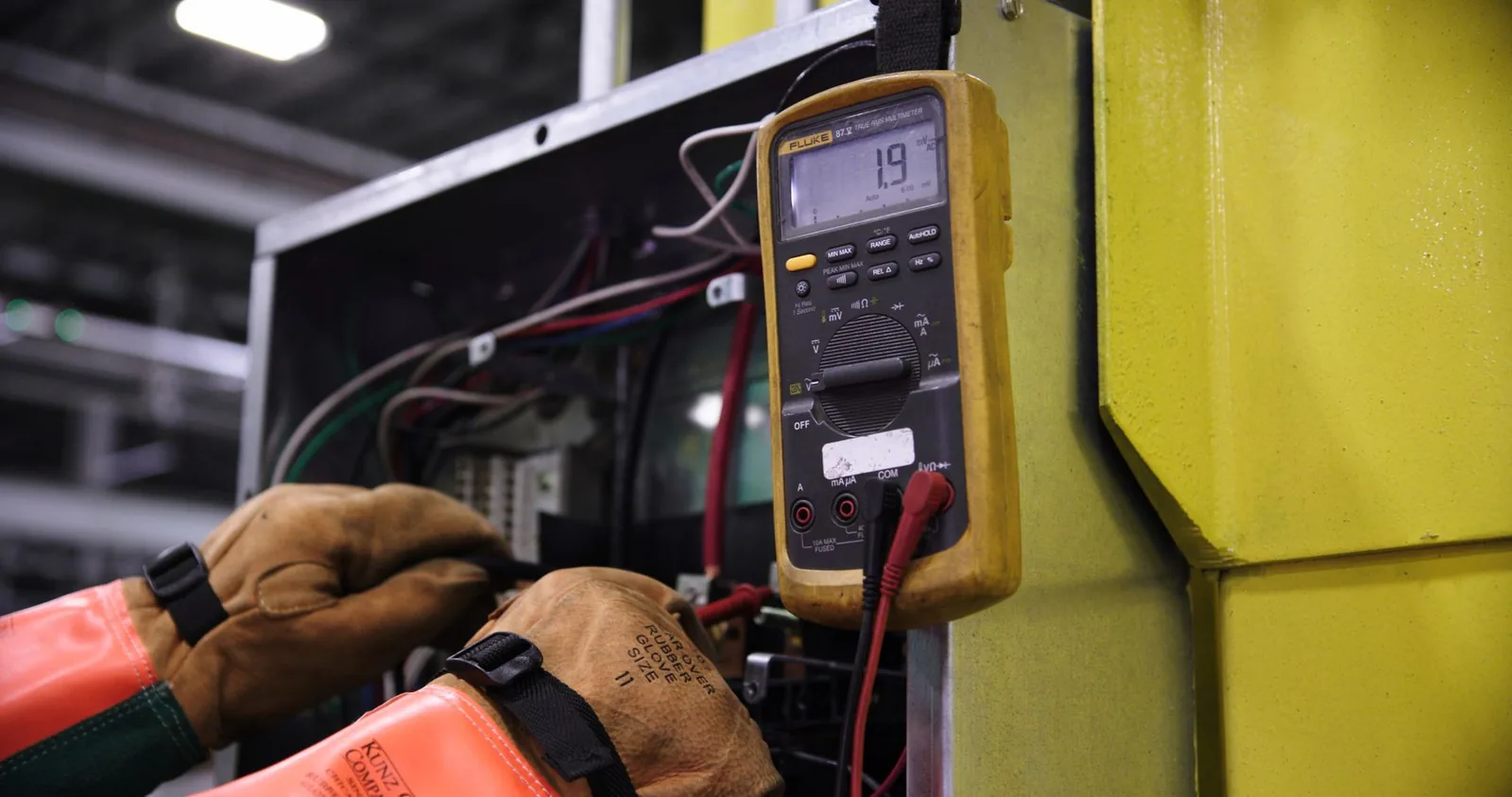
Your profile asks for your occupation as a National Occupational Classification (NOC) code. For the skilled worker programme, IRCC says your duties must match the code’s lead statement and most of its main duties. Choose the code your actual job fits, even if another code sits in a better category. A welder (72106), an electrician (72200), a plumber (72300), a carpenter (72310) or a heating, refrigeration and air-conditioning mechanic (72402) sits in the trades category, which needs 12 months of full-time work in a listed job within the past three years. Healthcare, STEM, education and transport have their own lists, and French speakers at CLB 7 in all four abilities have their own rounds.
Reading the lists is free. Stretching your job description to fit one is misrepresentation, and the officer checking your reference letters will compare the two.
One more thing has changed since many guides were written. Since 25 March 2025, a job offer no longer adds points to your Express Entry ranking score, the CRS (IRCC CRS criteria). It still matters for eligibility in some programmes, such as Federal Skilled Trades. It no longer lifts your score.
After you submit, the profile sits in the pool for 12 months and then expires automatically. Save screenshots of every page before it does, because a new profile must be entered from scratch.
Sixty days after the invitation
Most invitations are lost to the calendar. Once IRCC invites you, the invitation is valid for 60 days only. If you neither decline it nor apply in that time, it expires and your profile is removed from the pool. In those 60 days you upload proof of everything you claimed, and you also do three things that cannot be done in advance.
The first is the medical exam. IRCC asks Express Entry applicants to have it after the invitation and before applying, with a doctor on its panel-physician list; your own doctor cannot do it. Results are valid for 12 months.
The second is police certificates, which are needed for you and every family member aged 18 or over, from every country where any of you spent six months or more in a row in the last ten years. A reader who spent four years in Dubai or Riyadh needs a certificate from there as well as from India. In India, IRCC accepts a Police Clearance Certificate from the passport office, an Indian mission abroad, a BLS International centre or the district police; a character certificate will not do. The certificate from the country where you live now must be no more than six months old when you apply. If one is delayed, IRCC accepts a letter of explanation with proof that you asked for it in good time.
Order the certificates the week the invitation arrives.
The third is making the evidence match the profile. Your test scores, your ECA, your work dates and your duties are checked against what you entered when you claimed your points. A score that turns out lower than you claimed can sink the application. A claim that turns out false is misrepresentation.
You pay the fees when you submit, and then comes the wait. After you apply, IRCC’s letter gives you 30 days to give biometrics. Its operational guidance sets a standard of deciding 80% of complete applications within six months; IRCC does not promise it for any one file.
If you are approved outside Canada, you receive a Confirmation of Permanent Residence and, if you need one, a permanent resident visa. You must reach Canada before the date on the confirmation, carrying proof that you still have the settlement funds unless you are exempt. Declare it to the border officer if you are carrying CAD 10,000 or more.
What it costs, in dollars and rupees
Government fees are from IRCC’s fee list, checked on 2 October 2026. The settlement funds stay in your own account, but you must hold them throughout.
| Item | CAD | About (₹) | When |
|---|---|---|---|
| IELTS General Training, per attempt (India) | n/a | 19,000 | Before the profile |
| ECA report | Set by assessor | Check its site | Before the profile |
| Processing fee and right of PR fee, per adult | 1,590 | 1.07 lakh | With the application |
| Dependent child | 270 | 18,300 | With the application |
| Biometrics, per person (family maximum) | 85 (170) | 5,700 (11,500) | With the application |
| Medical exam | Set by panel physician | Paid at the clinic | After the invitation |
| Settlement funds, one person (held) | 15,263 | 10.3 lakh | Shown at application and landing |
| Settlement funds, family of four (held) | 28,362 | 19.2 lakh | Shown at application and landing |
An illustrative sum for a couple with two children applying from India: the government fees come to CAD 3,890 (two adults at 1,590, two children at 270 and the family biometrics maximum of 170), about ₹2.63 lakh. They must also show CAD 28,362, about ₹19.2 lakh, in their own accounts. Add language tests, the ECA, medical exams for all four and police certificates. A quote far above that total is paying someone for something, so ask what.

The job offer that costs five years
Some readers will have been offered a quicker route: a Canadian job offer, sometimes with a Labour Market Impact Assessment (LMIA) attached, for a fee of several lakh rupees. I understand why it tempts. A family that has saved for years and watched the cut-offs move sees a document that promises to end the wait.
Canada has written the price down. Its own advice for applicants in India says the company must pay the LMIA fee, that honest companies pay recruiters to find workers, and that ‘No one can guarantee you a visa or PR.’ Canada’s employment department adds that an employer may not make you pay to get or keep your job. Anyone asking you to pay for a Canadian job offer is asking for money Canada’s rules forbid employers to take, and since March 2025 even a genuine offer adds no CRS points.
If false documents reach IRCC, the price is set in law. Section 40 of the Immigration and Refugee Protection Act makes a person who misrepresents a material fact inadmissible for five years. IRCC says the consequences can include refusal, a permanent record of fraud and a ban of at least five years. It also says you are responsible for everything in your application, even if a representative filled it in. The agent who sold the document loses a client. You lose the five years, and the savings that paid for it.
The legal routes are slower, but they exist: a better test score, French, a year of work in Canada, a provincial nomination or an occupation in a named category.
Do you need a consultant?
Not to fill in forms you can read. IRCC’s help centre says that if you hire a representative, the officer will not give your application special attention, and that a representative cannot guarantee approval. The forms and guides are free on canada.ca.
A licensed adviser earns the fee in harder cases. These include an earlier refusal or a past finding of misrepresentation, any criminal charge, an earlier overstay anywhere, a work history built on self-employment or with gaps that are hard to document, and a family situation that is not straightforward. In those cases a Regulated Canadian Immigration Consultant (RCIC) or a Canadian lawyer can save you a refusal. Canada authorises only consultants registered with the College of Immigration and Citizenship Consultants, lawyers in good standing with a Canadian law society, notaries with the Chambre des notaires du Québec and paralegals licensed by the Law Society of Ontario. Before you pay anyone, look up the name and licence number on the College’s public register, or in the provincial law society’s directory for a lawyer. A ‘visa agent’ in your town may be a decent person, but unless they are on one of those registers, they cannot lawfully advise you for a fee. Our earlier piece on how to tell whose interests an education adviser serves has questions that apply just as well to immigration advisers.
Migration pillar page for PR Pathways
If the invitation does not come
A profile can sit in the pool for 12 months and expire without a call. That says nothing about your worth as a worker; it means your score and your queue did not meet a round in that year. The data since February suggests where to push: language first, then French if you have any base in it, then provincial nominations made through Express Entry, which carry 600 points, and the category lists, read again each year as Canada revises them.
Everything here reflects canada.ca on 2 October 2026, and Canada revises Express Entry rules, fees and categories often, so confirm each figure there before you act. If your case involves a past refusal, a criminal record or anything you are unsure how to declare, speak to an RCIC or a Canadian immigration lawyer first. If you would like to see where your own score stands before you spend money on any of this, start with our CRS calculator.
For a candidate in the 470s with no category, no French, no Canadian work and no nomination, IRCC’s own record since mid-February shows no round that would have reached them. Canada has run all-candidate rounds before and may do so again at any round. Until it does, the profile alone is unlikely to be enough for that reader, and a second route needs to start alongside it, while the 12 months are still running.
Australia
- Australia Student Visa Changes: Your Spouse Can No Longer Join Your Visa
- Navigating Australia’s Immigration System: Understanding Points, Sponsorships, and Nominations
- Aligning Education with Australia’s Skill Shortages: A Strategic Pathway for Migration
Canada
- Canada Express Entry 2026: Latest Draws, CRS Cut-offs and Dates
- Is Your Study Abroad Consultant Working for You? What Indian Families Learn Too Late
- You Paid $40,000 for a Canadian Degree. Now You’re Driving Uber. Why? Navigating Underemployment Among International Graduates
- Not Every Degree Will Save You: Navigating Canada’s New Study and Work Regulations
- You Studied in Canada. But Are You Skilled in Canada? The Missing Link Between Graduation and Job-Readiness
- When Canadian Experience Is Code for “Start Over”: Why Newcomers Are Told They Don’t Count—and How They Can Push Back
- Canada Is Still Open to Migrants — But Not to Everybody: Inside the Quiet Redesign of a Nation’s Immigration Strategy
Immigration Policy & News
Investment Migration
PR Pathways
Sources
- IRCC, Express Entry rounds data (JSON). Accessed 2 Oct 2026.
- IRCC, Express Entry: Category-based selection. Accessed 2 Oct 2026.
- IRCC, Federal Skilled Workers eligibility. Accessed 2 Oct 2026.
- IRCC, Canadian Experience Class eligibility. Accessed 2 Oct 2026.
- IRCC, Federal Skilled Trades eligibility. Accessed 2 Oct 2026.
- IRCC, Proof of funds. Accessed 2 Oct 2026.
- IRCC, Language tests for Express Entry. Accessed 2 Oct 2026.
- IRCC, Language test equivalency charts. Accessed 2 Oct 2026.
- IRCC, Educational Credential Assessment. Accessed 2 Oct 2026.
- IRCC, CRS criteria. Accessed 2 Oct 2026.
- IRCC, Submit your profile. Accessed 2 Oct 2026.
- IRCC, If you are not invited (profile expiry). Accessed 2 Oct 2026.
- IRCC, Apply for permanent residence. Accessed 2 Oct 2026.
- IRCC, After you apply. Accessed 2 Oct 2026.
- IRCC, If we approve your application: outside Canada. Accessed 2 Oct 2026.
- IRCC, Express Entry operational instructions. Accessed 2 Oct 2026.
- IRCC, Fee list. Accessed 2 Oct 2026.
- IRCC, Medical exams for permanent residents. Accessed 2 Oct 2026.
- IRCC, Police certificates for Express Entry. Accessed 2 Oct 2026.
- IRCC, Police certificates: India. Accessed 2 Oct 2026.
- IRCC, Consequences of fraud. Accessed 2 Oct 2026.
- IRCC, Know the rules before you apply (India). Accessed 2 Oct 2026.
- ESDC, Temporary foreign workers: your rights are protected. Accessed 2 Oct 2026.
- Immigration and Refugee Protection Act, section 40. Accessed 2 Oct 2026.
- IRCC, Authorized representatives. Accessed 2 Oct 2026.
- IRCC Help Centre, Do I need a representative?. Accessed 2 Oct 2026.
- IRCC Help Centre, Will my case be processed more quickly if I hire a representative?. Accessed 2 Oct 2026.
- College of Immigration and Citizenship Consultants, public register. Accessed 2 Oct 2026.
- IDP India, IELTS test fee. Accessed 2 Oct 2026.
- Xe, CAD to INR mid-market rate. Accessed 2 Oct 2026.
- Wise, CAD to INR rate. Accessed 2 Oct 2026.